Painter Zhang Yi Wins France’s Janus Prize, Using Chinese Mythological Figure Zhong Kui to Pioneer New Paths in Cross-Cultural Communication
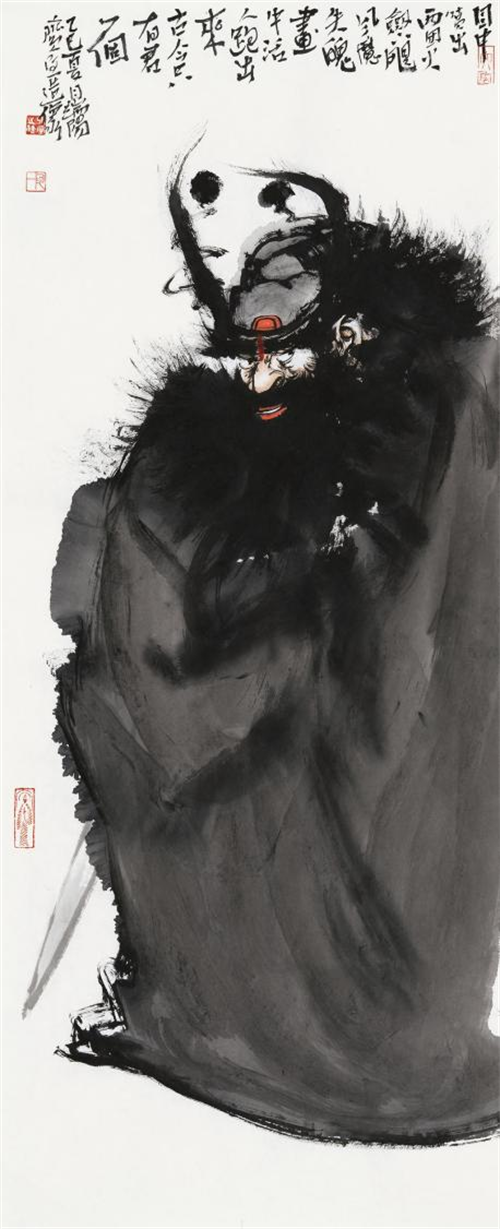
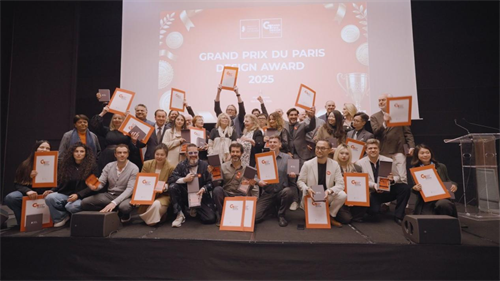
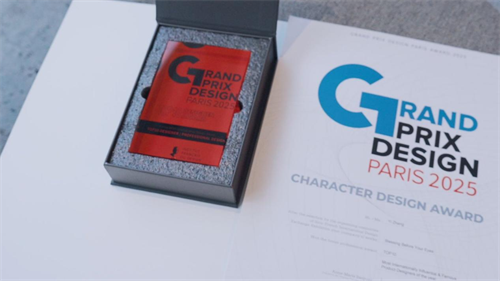
Recently, Chinese painter Zhang Yi’s Zhong Kui-themed artwork Fortune at Your Door was awarded a spot in the Global Top 10 in the Cultural and Creative category of the 2025 France Janus International Design Awards. This accolade not only recognises Zhang Yi’s artistic achievements but also brings the Chinese folk mythological figure Zhong Kui—the “Demon-Quelling Deity”—into Western awareness as a Janus-like figure, opening a cross-temporal and cross-cultural dialogue.

Zhong Kui: The “Janus” of the East
Zhong Kui is a figure from Chinese Daoist mythology, traditionally tasked with exorcising demons and dispelling evil. In Chinese folk culture, images of Zhong Kui are often displayed to ward off misfortune, and the legend of “Zhong Kui Catching Ghosts” has been passed down through generations. Within global mythologies, Zhong Kui occupies a unique space: he is both human and divine, ruling over the underworld yet frequently descending to the human realm to banish evil and bestow blessings. He is merciless toward malevolent spirits but benevolent toward ordinary people. As one scholar notes, “In Western mythology, humans and ghosts are strictly separated, with ghosts generally evil and harmful; in Chinese mythology, the morality of humans and ghosts is more dialectical, and Zhong Kui himself—though exorcising ghosts—is also part ghost.”
This “dual nature” interestingly parallels Janus, the Roman god of doors and transitions, who has two faces—one looking to the past, the other to the future—managing opposing forces simultaneously. Similarly, Zhong Kui both drives away evil and brings fortune; he is simultaneously authoritative and compassionate.
Zhang Yi, Executive Vice President and Secretary-General of the Shandong Artists Association, vividly captures this “dual-faced” essence in his award-winning work Fortune at Your Door. In the painting, Zhong Kui wears a bright red robe with a sword on his back, his gaze fixed on a bat flying gracefully above—“bat” (fu) being a homophone for “fortune” in Chinese culture. Remarkably, his expression lacks the traditional glare of wrath; instead, it exudes playfulness and anticipation, as if whispering to the viewer. Zhang transforms Zhong Kui from a mere “Demon-Quelling Deity” into a “Bringer of Fortune,” replacing the eerie or frightening imagery with a warm, auspicious aura.
Hugo and Zhong Kui: A Little-Known “French Connection”
The cultural ties between Zhong Kui and France stretch back to the 19th century. In the latter half of that century, the French literary giant Victor Hugo decorated the door panels of the “Blue Room” in his residence on Guernsey Island—Hauteville House—with paintings depicting “Zhong Kui Marries Off His Sister.” Hugo, a Romanticist writer, was also a passionate painter with a deep fascination for Chinese culture. Many of his works employed ink wash techniques reminiscent of Chinese splash-ink painting. He was particularly drawn to the “grotesque” figures in Chinese art, seeing in them the Romanticist pursuit of contrast: “Ugliness sits beside beauty; deformity approaches elegance; vulgarity hides behind the sublime.”
Nearly a century and a half later, Chinese painter Zhang Yi reintroduced Zhong Kui to France in a fresh artistic form, earning an international award named the “Double-Faced God”. This was no mere coincidence, but a profound resonance between Chinese and French aesthetic traditions centered on the notion of the “grotesque.”
The Beauty of the “Grotesque”: A Sino-French Aesthetic Dialogue
For French audiences, Zhong Kui’s wild hair, tangled beard, and fierce visage epitomize the “grotesque.” Yet, 19th-century French Romanticism celebrated precisely this aesthetic. Hugo asserted that “ugliness sits beside beauty; deformity approaches elegance,” a principle harmonizing with the Daoist idea of yin and yang, where opposites coexist in balance.
In Hugo’s view, the “grotesque” in Chinese art is not mere deformity—it is an imaginative, rule-breaking force. Balzac noted that ugliness offers far more richness and diversity than beauty, while the Chinese had recognized over a millennium ago the immense power embodied in the “ugly.” Gautier commented, “The Greeks pursue the ‘ideal of beauty’; the Chinese pursue the ‘ideal of the grotesque.’” Here, “grotesque” is not derogatory; it refers to a vibrant, imaginative aesthetic. Baudelaire further emphasized “irregularity”—the unexpected, the surprising, the astonishing—as a core feature of beauty.
Within this shared aesthetic tradition, Zhang Yi’s depiction of Zhong Kui resonates deeply with French audiences. The “grotesque” exterior aligns perfectly with Romanticism’s fascination with surprise and the unexpected. Beneath this exterior lies righteousness, warmth, and compassion, embodying the principle that “ugliness sits beside beauty.” Zhang Yi’s multi-faceted portrayal evokes comparisons to Hugo’s Quasimodo—“ugly outside, beautiful inside”—both concealing a pure, benevolent soul beneath a strikingly unconventional appearance.
Zhong Kui Opens a New Path for Cross-Cultural Communication
From Hugo’s 19th-century door panel to Zhang Yi’s award-winning Fortune at Your Door in Paris, this century-and-a-half-long cultural trajectory carries a deeper lesson: genuine cross-cultural communication does not dilute one’s identity; rather, it reveals universal values inherent in one’s culture. Zhong Kui embodies justice, protection, and moral order—values that remain meaningful in our contemporary world. Through his artistry, Zhang Yi has built a bridge for dialogue between East and West, demonstrating how traditional Chinese mythology can spark a global aesthetic and cultural conversation.