Laiwu Pyrography: A Century of Art Burned into Wood
Pyrography, also known as “fire-pen painting,” is a distinctive form of artistic expression. The Mei-style pyrography of Yangzhuang in Laiwu dates back to the late Qing Dynasty and has a history of more than a century. Using precise temperature control and without applying any pigments, artists create images by burning patterns onto wooden boards with a heated pen, earning it the poetic name “the art of fire and wood.”
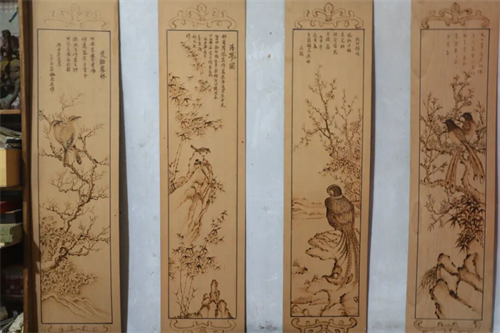
Mei Qingguo, a representative inheritor of Mei-style pyrography, emphasizes mastering heat and pressure while following the principle that “the idea comes before the stroke, and the image takes shape with each touch.” Through a range of techniques such as toning, scorching, shading, fine detailing, and smoke finishing, his works achieve rich visual effects, including depth, layering, and tonal variation.
His pyrography incorporates traditional Chinese painting techniques like outlining, texturing, dotting, washing, and freehand brushwork, while also producing intricate layers and tonal richness reminiscent of sepia sketches or lithographs. As a result, his works preserve the distinctive aesthetics of traditional Han Chinese art while achieving the precision and realism often associated with Western painting. Characterized by clean, natural, and fluid lines, his pieces are both richly detailed and enduring in color, offering a timeless elegance and lasting visual appeal. The subjects of pyrography are wide-ranging, from landscapes and figures to flowers, birds, animals, and calligraphy—virtually anything can be brought to life through fire on wood.
Passed down through generations, Mei-style pyrography continues to evolve, with each inheritor building upon traditional techniques while introducing new ideas. Works from different periods reflect the social landscape, daily life, and aesthetic values of their time, making this art form not only visually captivating but also culturally meaningful.